At the invitation of institutions including the India International Centre, the Idea of India Summit 2026, Synapse 2026, and Ashoka University, Yan Xuetong, Distinguished Professor and Honorary President of the Institute of International Relations, Tsinghua University, visited India in late February. He conducted multiple academic exchange activities in New Delhi, Mumbai and Gurugram, engaging in extensive contact and in-depth exchanges with people from the Indian government, strategic community, academia, and business community, and sharing his views on AI development in the digital age, China-India relations, and regional and international hotspot issues.
In-depth Exchanges with Various Sectors in New Delhi
During his visit to New Delhi, Professor Yan was invited to the residence of the Indian Minister of External Affairs for a one-on-one meeting with Dr. S. Jaishankar, India’s Minister of External Affairs. The two sides held in-depth discussions on great-power competition in the digital age, the rise of counter-globalization and populism, nuclear proliferation, and other topics, and discussed the possibility that future AI development could produce two sets of technical standards. Minister Jaishankar presented Professor Yan with personally signed copies of his two books, Why Bharat Matters and The India Way.
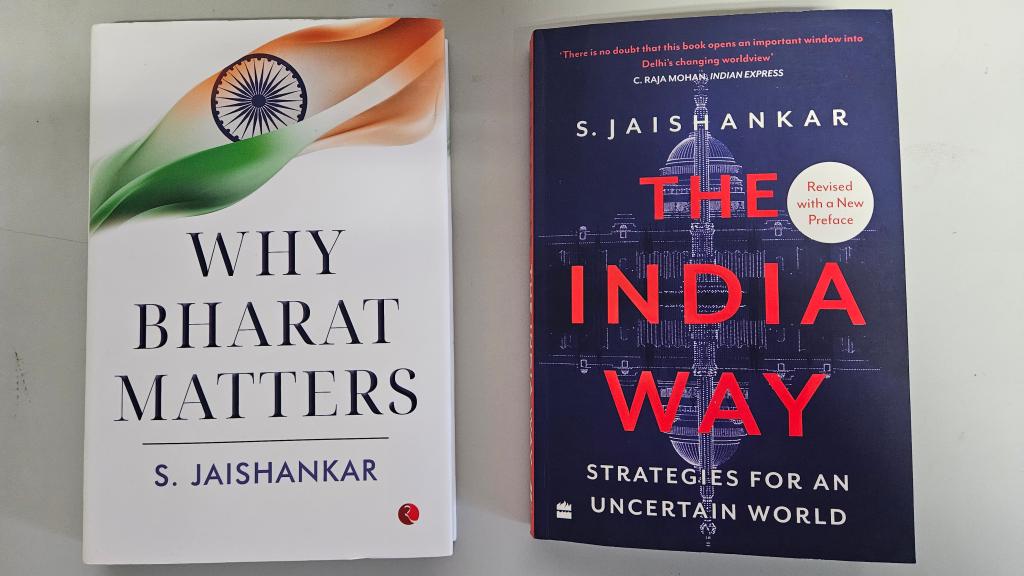
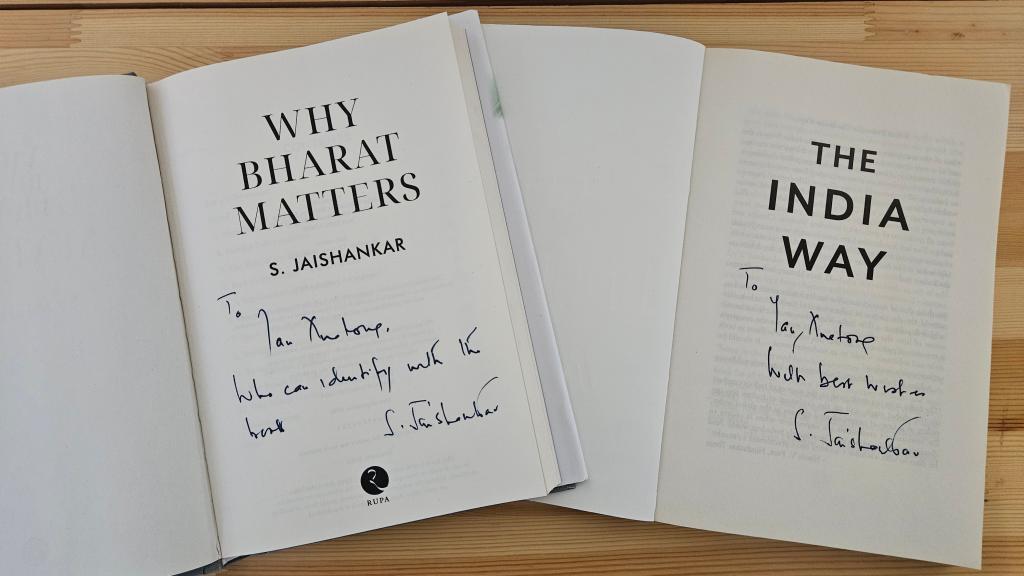
(Pictured: Dr. S. Jaishankar presents books to Professor Yan Xuetong.)
At the India International Centre (IIC), Professor Yan delivered a talk titled “Trump's Challenge to the Global Order.” The lecture was chaired by Shyam Saran, President of the India International Centre and former Foreign Secretary of India. Professor Yan pointed out that the international order will enter “an era without leadership,” whose direction will depend on decision-makers in major countries; future great-power competition will depend on technological competition rather than ideological competition, and strategic partnerships among countries will be defined to a large extent by technological relations. More than 200 people from Indian government agencies, universities, think tanks, and other organizations attended the event.
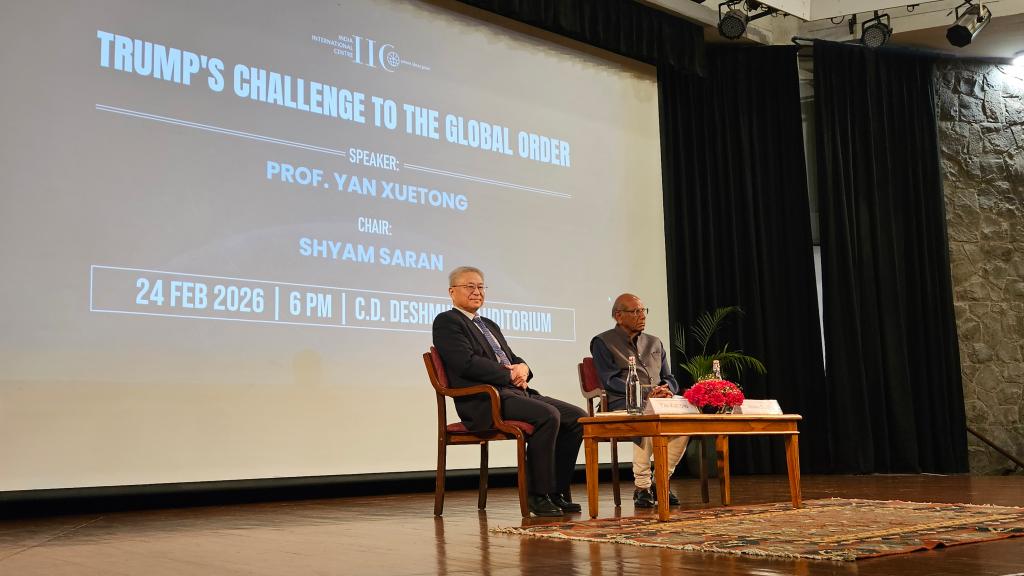
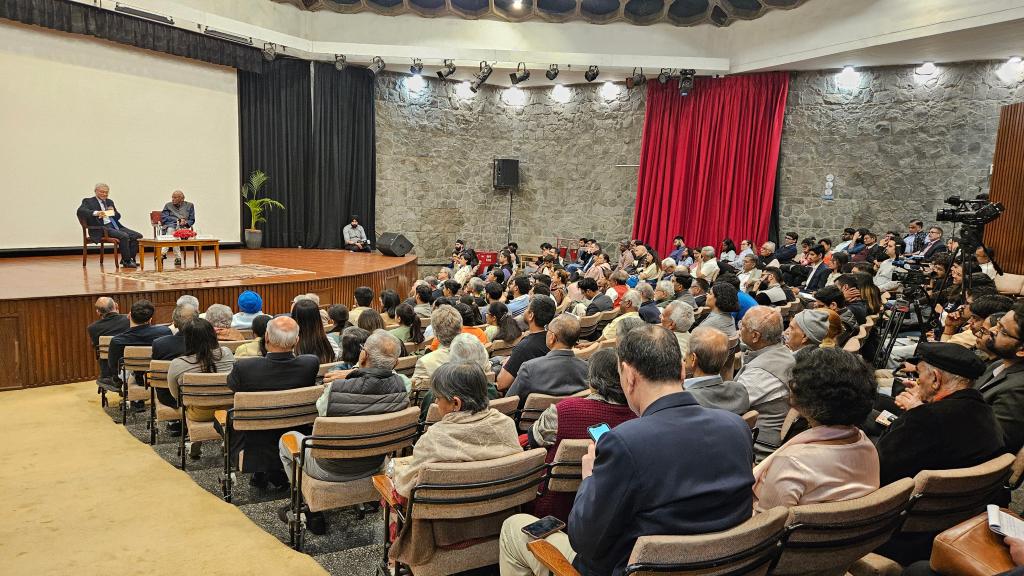
(Pictured: Professor Yan Xuetong delivers a lecture at the India International Centre.)
Shyam Saran also hosted a dinner seminar and a morning closed-door workshop for Professor Yan Xuetong, during which they held in-depth exchanges on issues such as cybersecurity, the possibility of China-India cooperation at the level of international order, and AI technology development in the digital age. Key guests attending the events included: Narinder Nath Vohra, former Principal Secretary to the Prime Minister and former Defence Secretary of India; Pavan Kapoor, incumbent Deputy National Security Adviser of India; Suman K. Bery, Vice Chairman of NITI Aayog; Shivshankar Menon, Chair of the Centre for China Studies at Ashoka University and former National Security Adviser of India; Vijay Nambiar, former UN Under-Secretary-General and former Indian Ambassador to China; Deepak Nayyar, Emeritus Professor at Jawaharlal Nehru University; Ashok K. Kantha, former Indian Ambassador to China; Gautam Bambawale, former Indian Ambassador to China; Sujan R. Chinoy, Director General of the Institute for Defence Studies and Analyses and former Ambassador to Japan; Alka Acharya, Honorary Director of the Institute of Chinese Studies, India; and others.
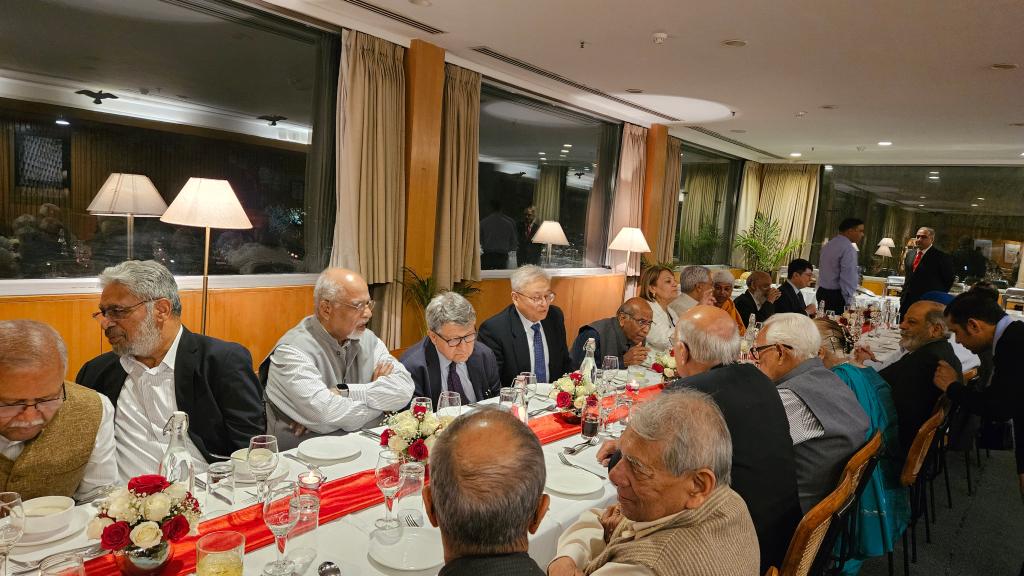
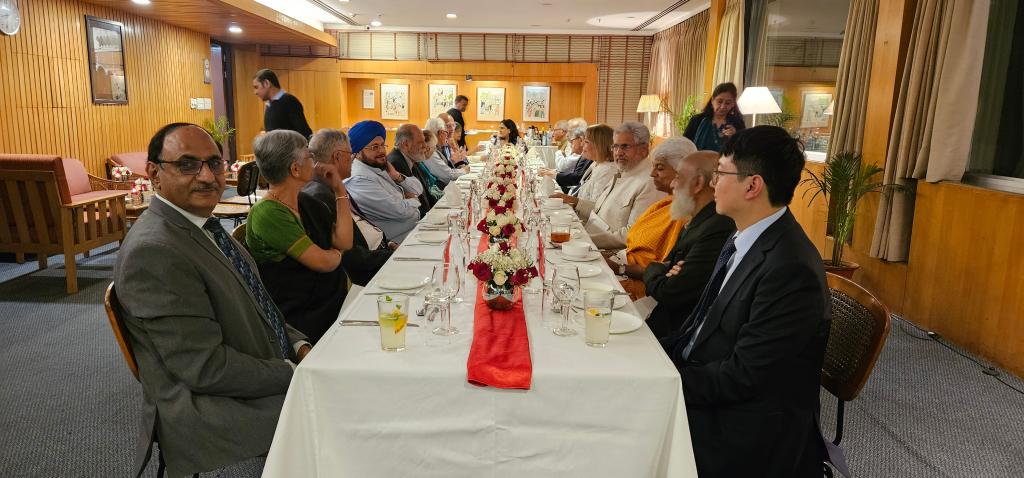
(Pictured: India International Centre hosts a dinner seminar for Professor Yan Xuetong.)
Visiting Chinese Diplomatic Missions in India
During his visit to India, Professor Yan visited the Embassy of China in India and the Consulate General of China in Mumbai, meeting with Xu Feihong, Chinese Ambassador to India, and Qin Jie, Chinese Consul General in Mumbai. In his talks with Ambassador Xu Feihong, the two sides communicated on issues including China-India bilateral relations and people-to-people and cultural exchanges. At the Consulate General in Mumbai, Professor Yan held a discussion with the consulate staff on current great-power competition and the international situation.
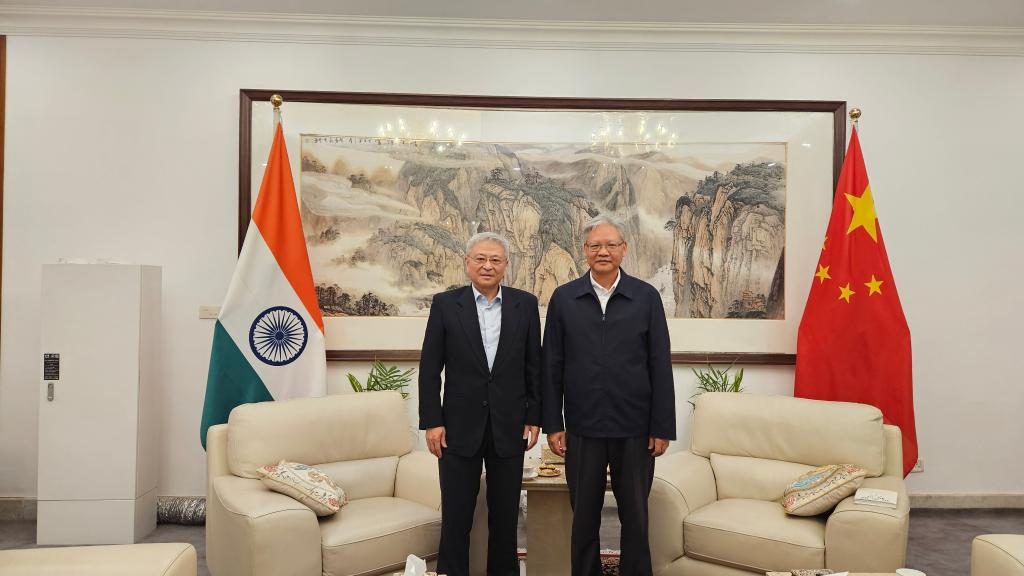
(Pictured: Professor Yan Xuetong and Ambassador Xu Feihong.)
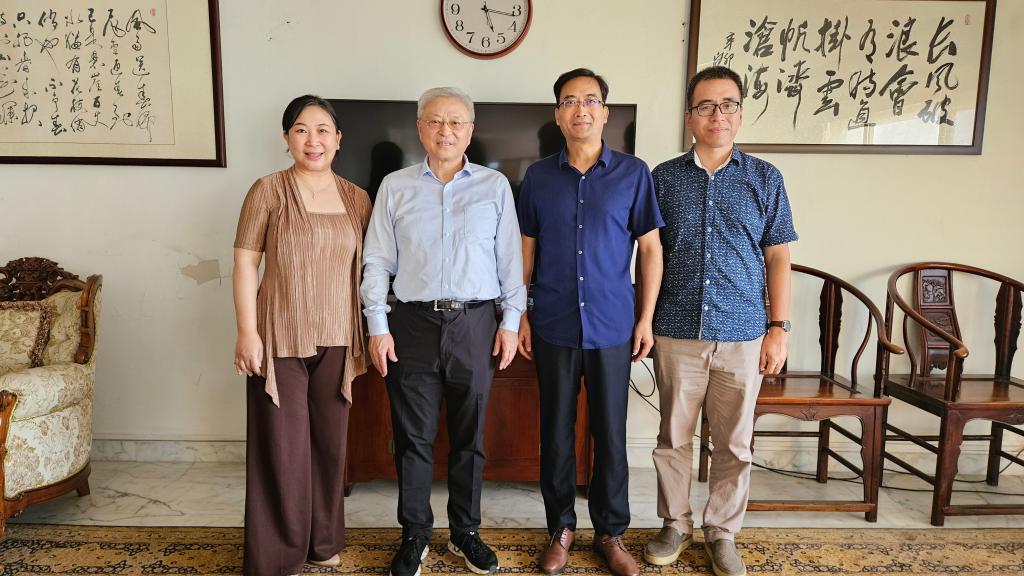
(Pictured: Professor Yan Xuetong and Consul General Qin Jie.)
Attending Two Important Summits
Professor Yan was invited to attend the Idea of India Summit 2026 and delivered a keynote speech titled “G0: The Counter-Globalization Order.” He noted that order exists not only in physical space but also in cyberspace. With the rise of populist currents, the world is facing a counter-globalization order, showing trends such as market fragmentation and political authoritarianism. In a panel discussion at the summit, Professor Yan engaged in a lively dialogue with Professor John J. Mearsheimer of the University of Chicago and Professor Monica Duffy Toft of Tufts University on issues such as whether a multipolar world has taken shape and the reshaping of the world order. The Idea of India Summit is organized by ABP Media Group. The theme of this year’s summit was “The New World Order,” aiming to explore India’s role, vision, and growing influence in a rapidly changing world.
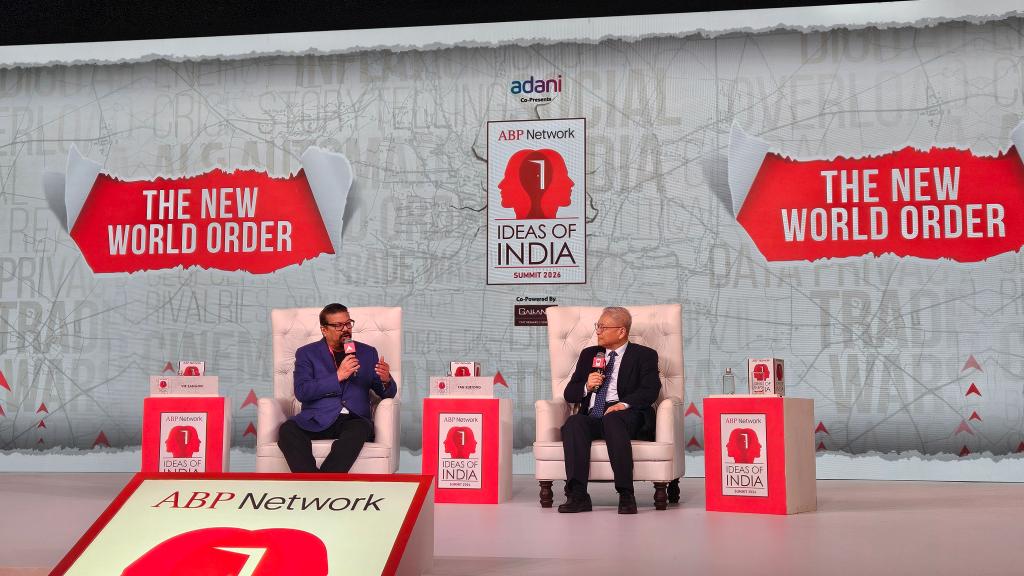
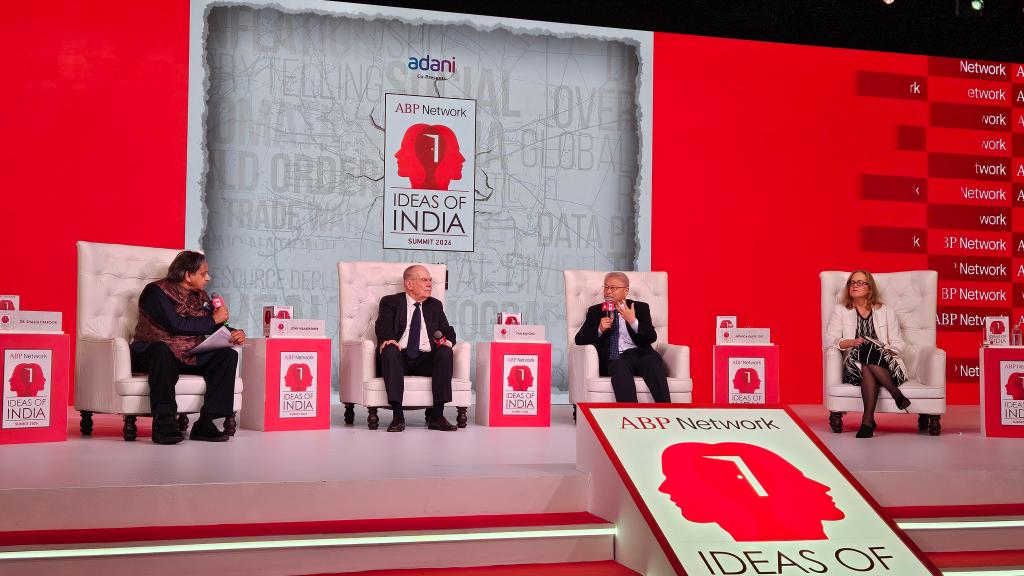
(Pictured: Professor Yan Xuetong attends the Idea of India Summit 2026.)
Professor Yan also attended Synapse 2026 and held a dialogue with the summit’s founder, Shoma Chaudhury, on issues including China-US-India trilateral relations, China-India scientific and technological cooperation, and the Global South. Professor Yan said that a power gap still exists between China and the United States and that after Trump’s term ends, the gap in comprehensive national power between China and the US is expected to narrow. Synapse is an interdisciplinary ideas forum exploring the interaction among science, technology, and society, with more than 1,000 people from the technology and business communities attending. After the event, Professor Yan held a small-group discussion with representatives from India’s technology and business communities.
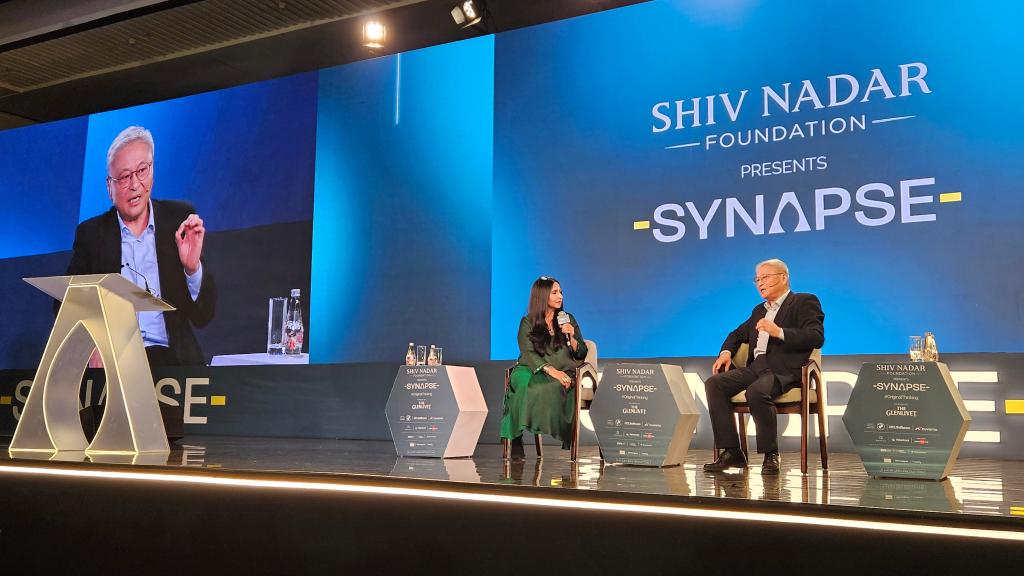
(Pictured: Professor Yan Xuetong attends Synapse 2026.)
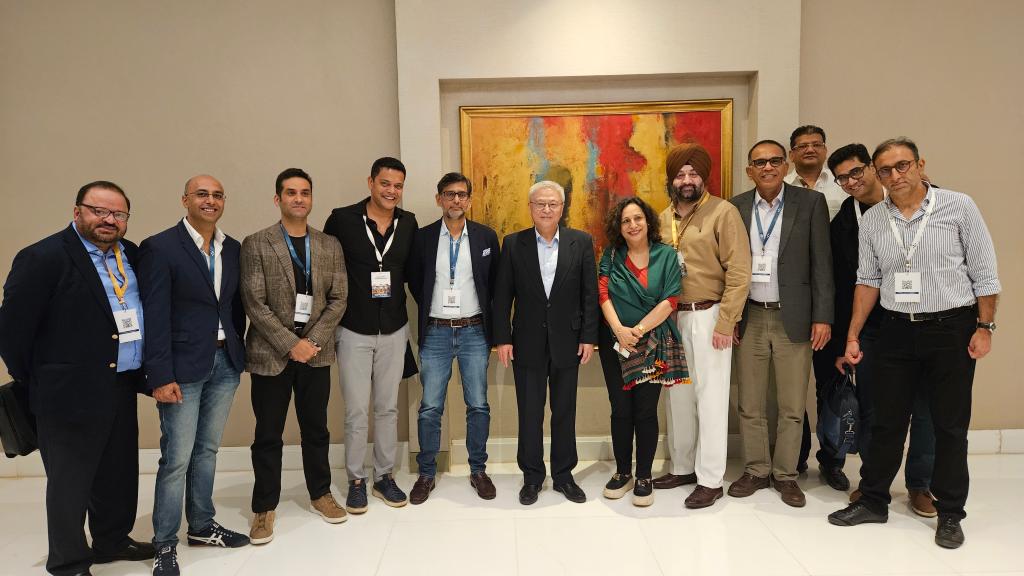
(Pictured: group photo with representatives of Indian entrepreneurs.)
Visiting Ashoka University
At the invitation of Shivshankar Menon, Chair of the Centre for China Studies at Ashoka University and former National Security Adviser, Professor Yan visited Ashoka University and met with Chancellor and renowned Indian historian Rudrangshu Mukherjee, exchanging views on issues such as the development of higher education in China and India and the development of international relations as a discipline. Professor Yan visited the university’s library and archives and held a discussion with faculty members in international relations. He then delivered a lecture titled “Moral Realism and the Role of Leadership,” explaining the evolution of realist schools and the three levels of analysis in international relations (system, state, and individual). He noted that leadership type serves as a link connecting these three levels, and that the core of moral realism is “political leadership determinism”—namely, that the type of great-power leadership is the most critical variable in changes in the international configuration.
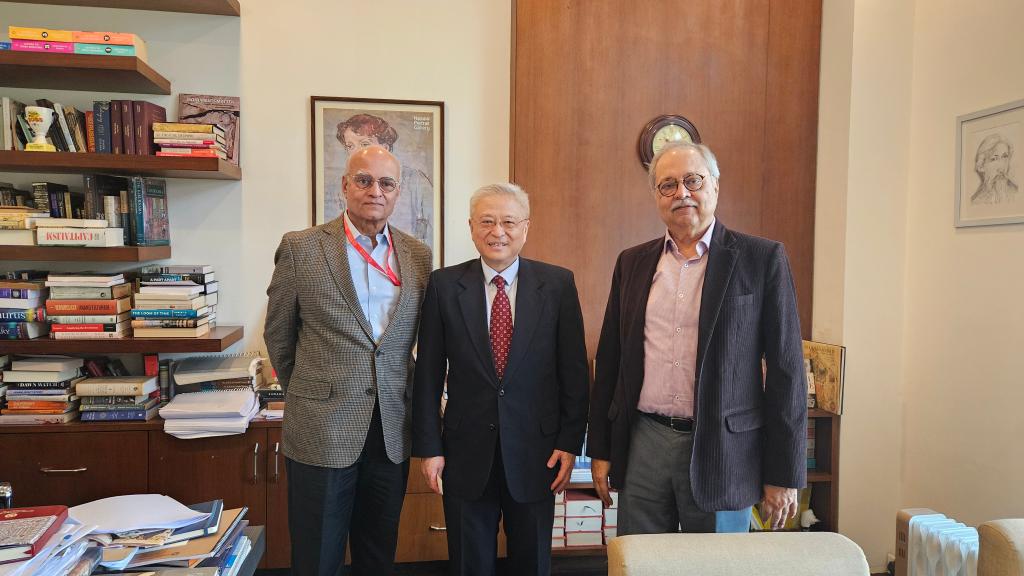
(Pictured: Professor Yan Xuetong with Chancellor Rudrangshu Mukherjee of Ashoka University and Shivshankar Menon, Chair of the Centre for China Studies and former National Security Adviser.)
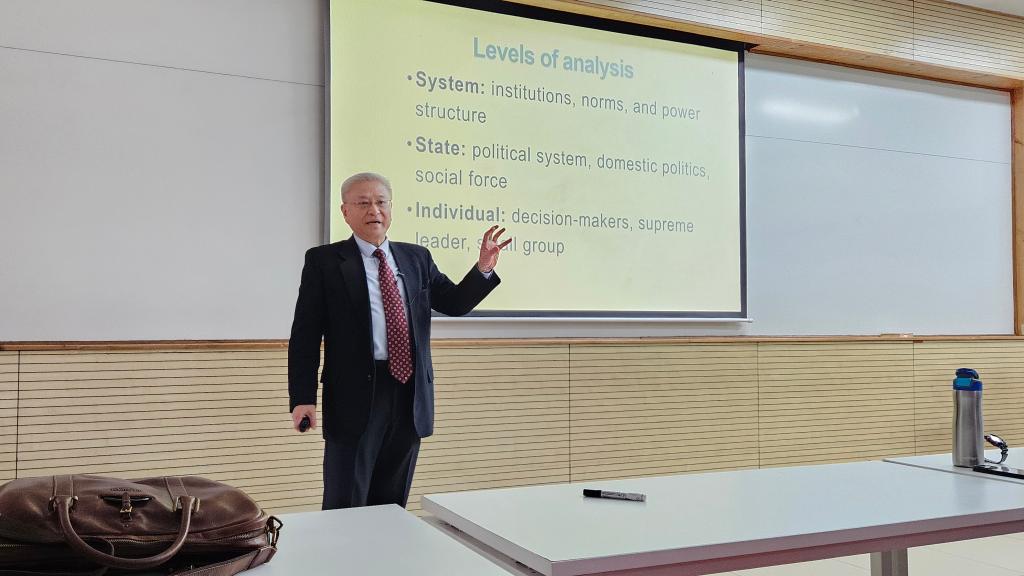
(Pictured: Professor Yan Xuetong gives a lecture at Ashoka University.)
Receiving Interviews with Indian Mainstream Media
During the visit, Professor Yan also gave separate interviews to Indian mainstream media outlets The Statesman and ABP TV, sharing his views on issues including Trump’s tariff policy, the development of India’s AI industry, China-US relations and the international order, and the direction of BRICS cooperation.
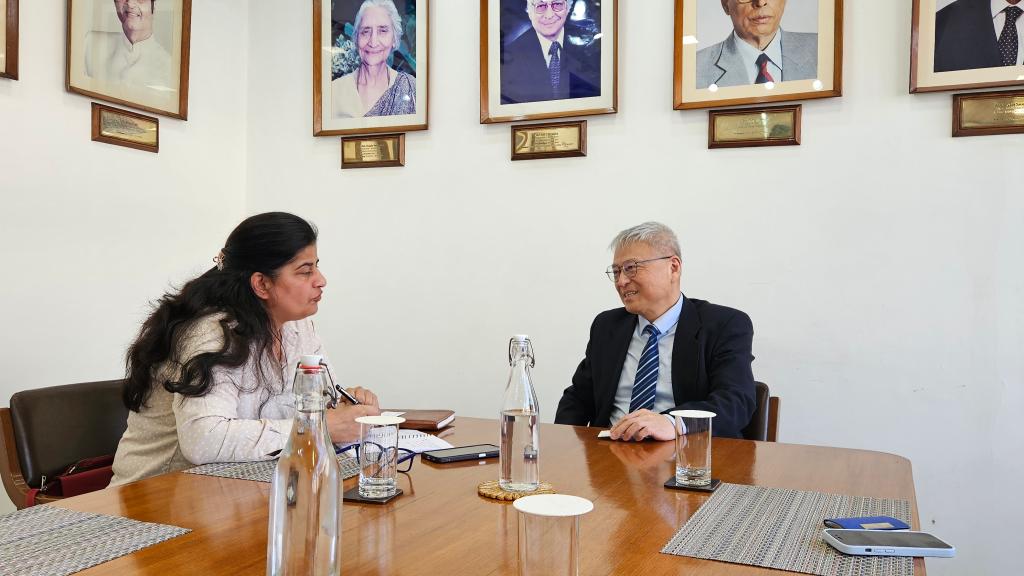
(Pictured: Professor Yan Xuetong receives an interview with Indian mainstream media The Statesman.)
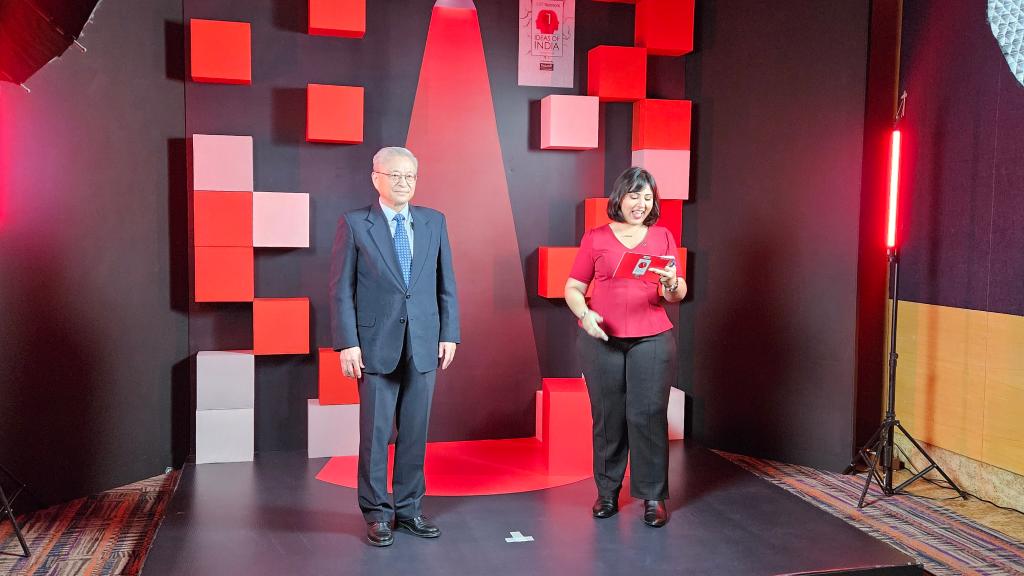
(Pictured: Professor Yan Xuetong receives an interview with India’s ABP TV.)
Ai Banglin, Director of International Affairs & Communications at the Institute of International Relations, Tsinghua University, accompanied Professor Yan Xuetong on this visit.